
Revenue Cycle Management and Patient Payment Software
What is revenue cycle management software?
Revenue cycle management (RCM) software manages the financial processes associated with patient care from scheduling through final payment including insurance verification, claim submission, denial management, and patient collections. Integrated RCM software connects to clinical and scheduling data to identify upstream errors before claims are submitted.

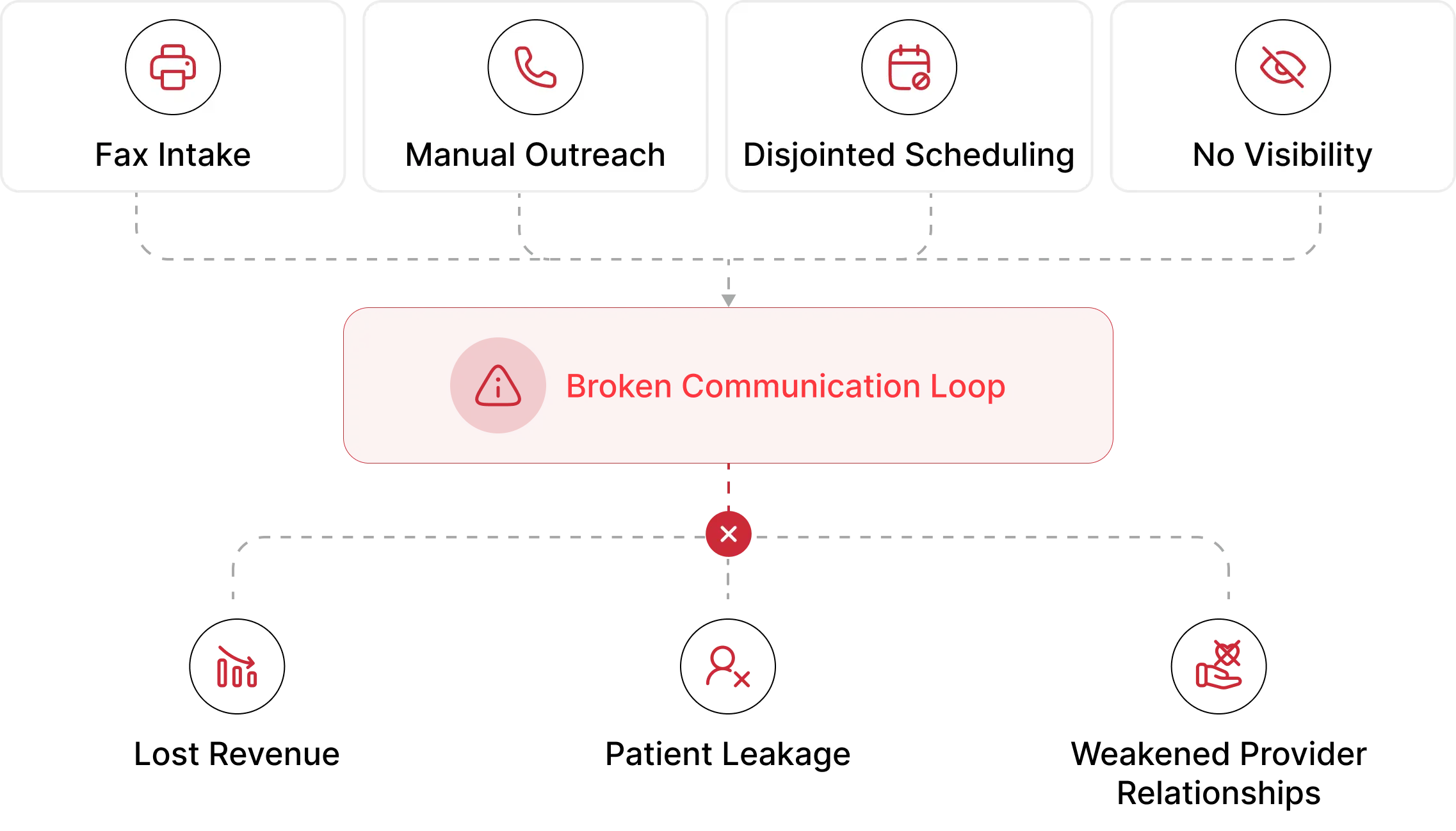
Chasing patient payments manually and blindly
Patient payment and collection issues rarely start in the billing department, but the Revenue Cycle Management (RCM) team inevitably feels the ultimate impact of upstream errors. When financial clearance operates blindly disconnected from scheduling and clinical operations practices suffer from uncollected balances, aging A/R, time-consuming denial rates, and an overall revenue leakage of 7–10% annually.
Relying on manual phone calls and mailed paper statements dramatically slows cash flow and frustrates the modern patient.
Integrated revenue cycle management software that fixes problems before claims are filed
RSI's revenue cycle management software eliminates the guesswork from financial operations by providing complete transparency from the initial patient source down to the payment detail for every individual journey.
By integrating revenue cycle management directly with scheduling and clinical operations, RSI improves denial rates by addressing data errors upstream before the claim is ever submitted. Bring RCM responsibility from the back office to the front office with our patient payments platform.
Bring revenue cycle management beyond the billing department
RSI integrates revenue cycle management with scheduling, patient intake, clinical workflows, and payments giving every department visibility into the financial health of the patient journey.
Upstream workflow controls & financial clearance
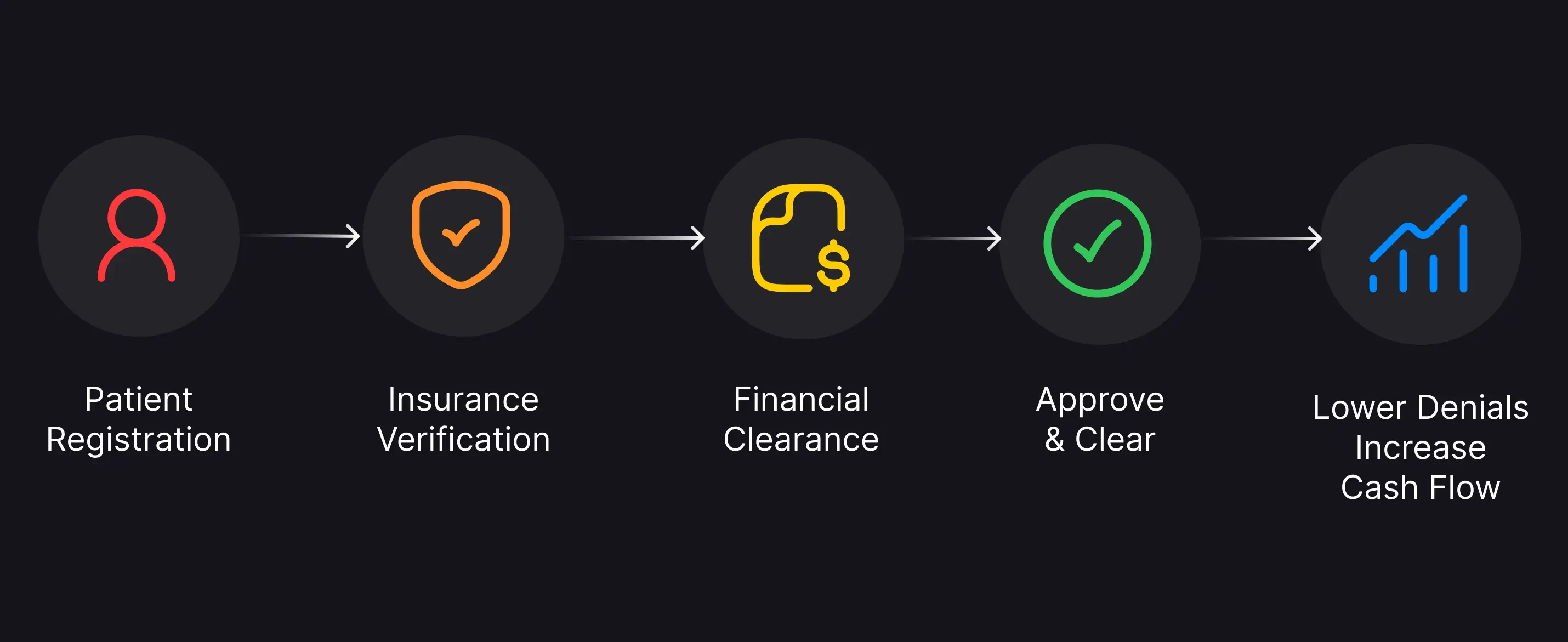
Collaborate with front desk and patient access teams to design RCM-related workflows for co-pay and outstanding balance collection. Automate associated forms, insurance verification, and more lowering denial rates and increasing cash flow.
Automated pre-payment & outstanding balance collections
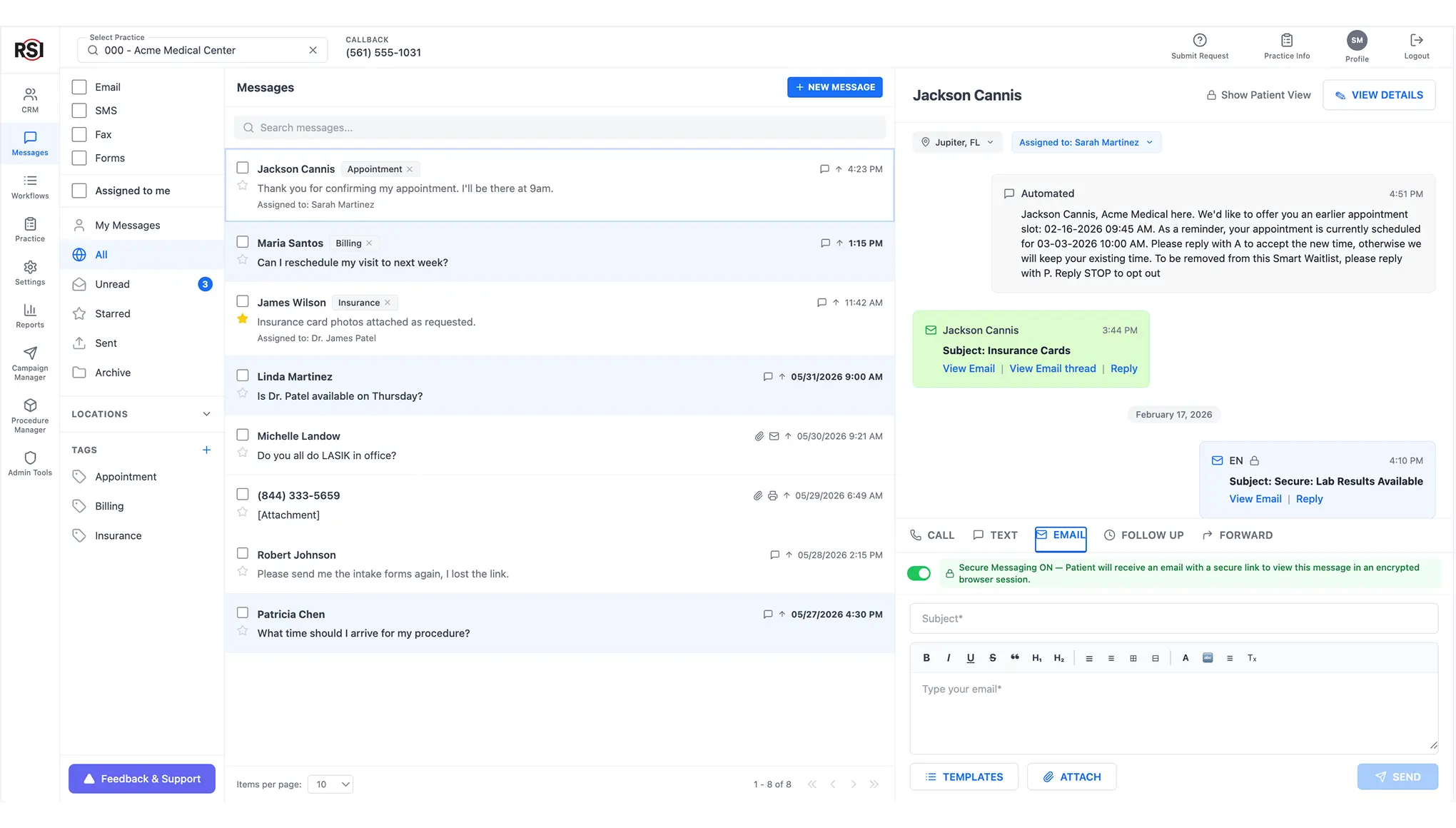
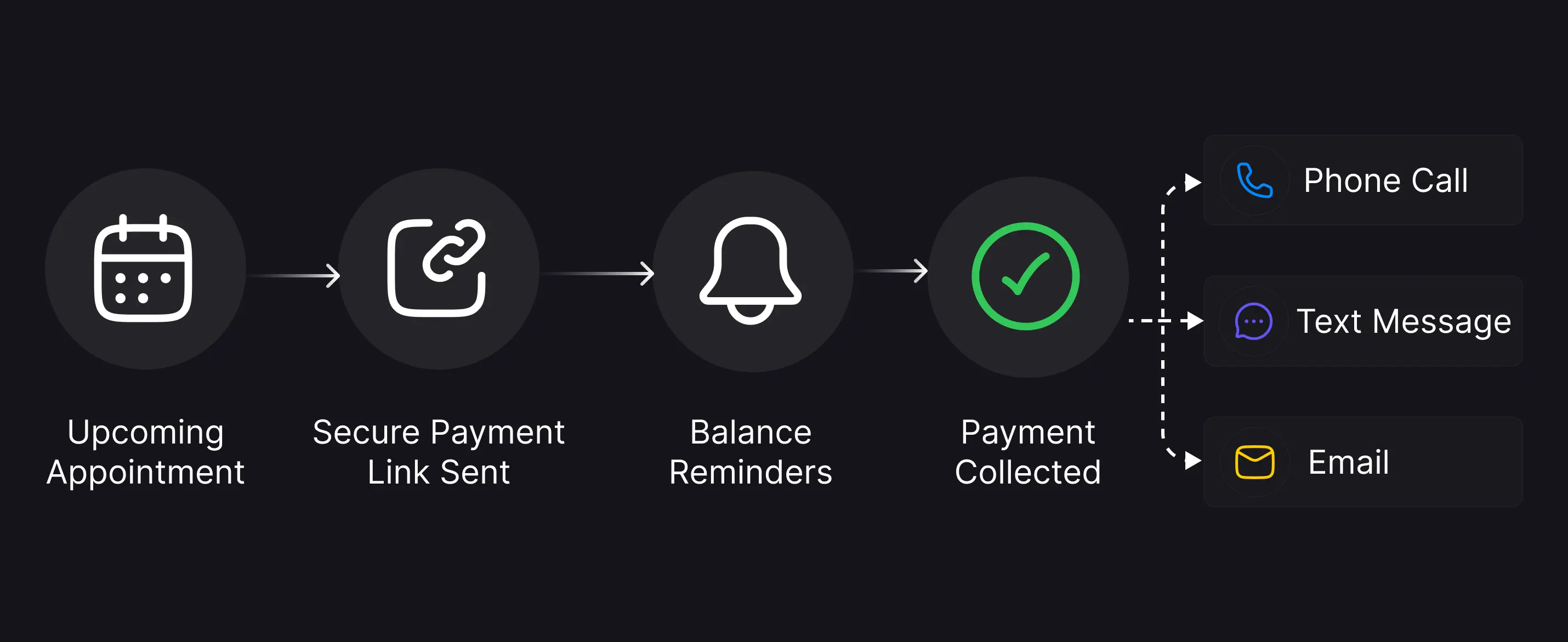
Automated secure payment links sent prior to appointments, combined with targeted outstanding balance notifications and custom human oversight workflows. Allow any phone call, text, or email in any department to collect payments.
AI-enabled phone & text collections
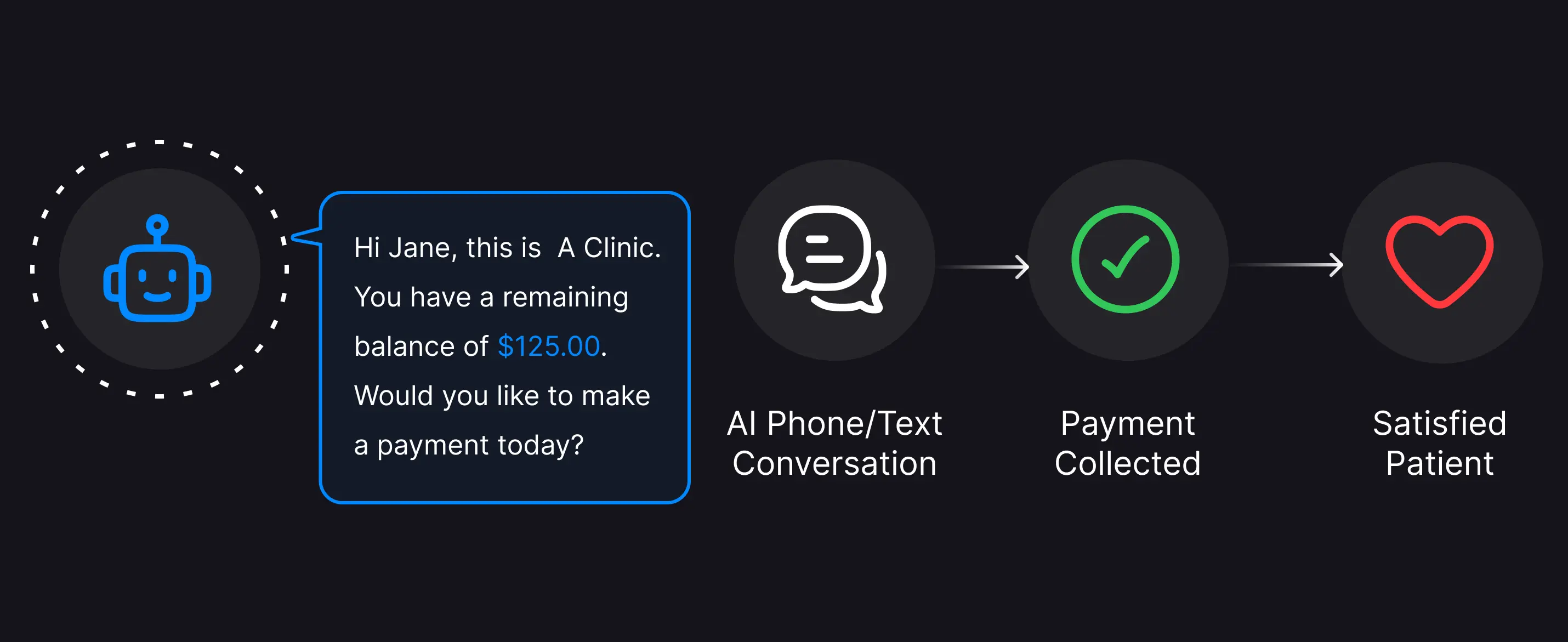
Manage patient collections prior to patient scheduling through conversational AI-enabled phone calls and texts without additional staff.
Integrated human oversight workflows
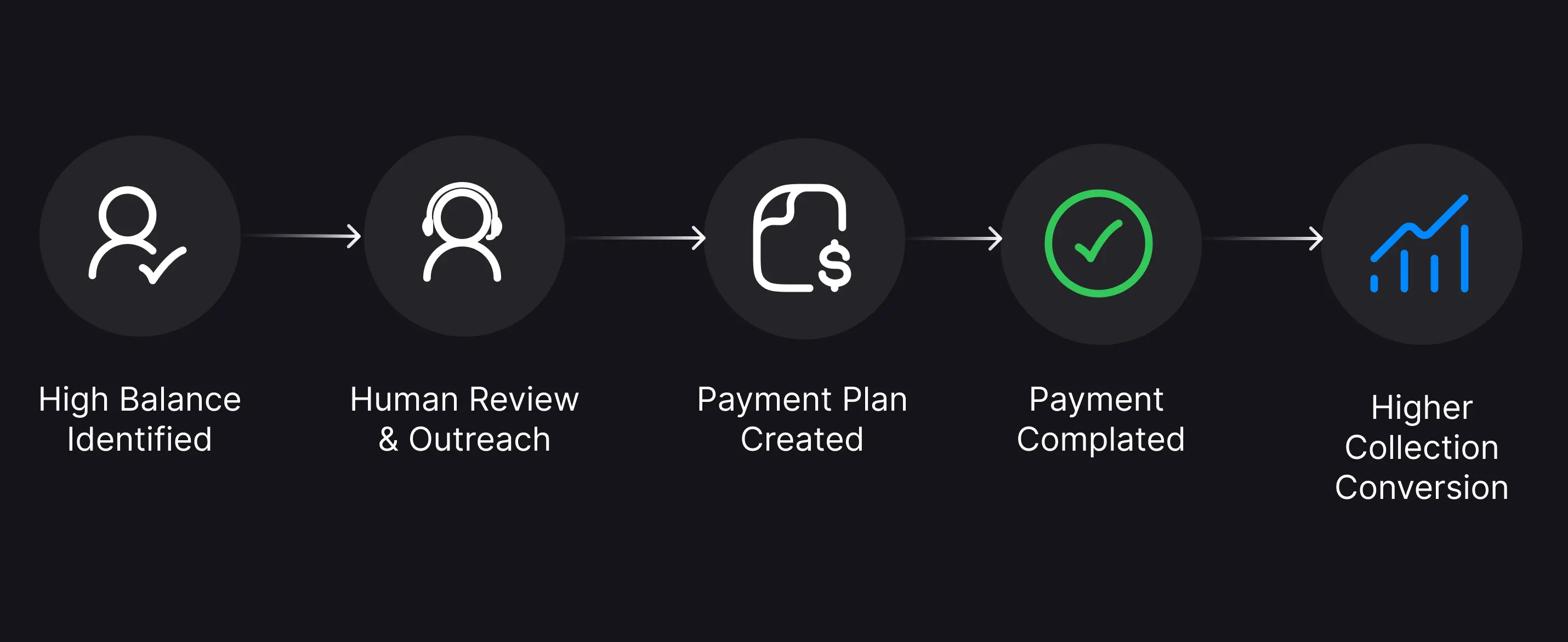
Integrate human oversight and action associated with higher balance collections, leading to increased conversion rates on large outstanding balances while not compromising the patient experience.
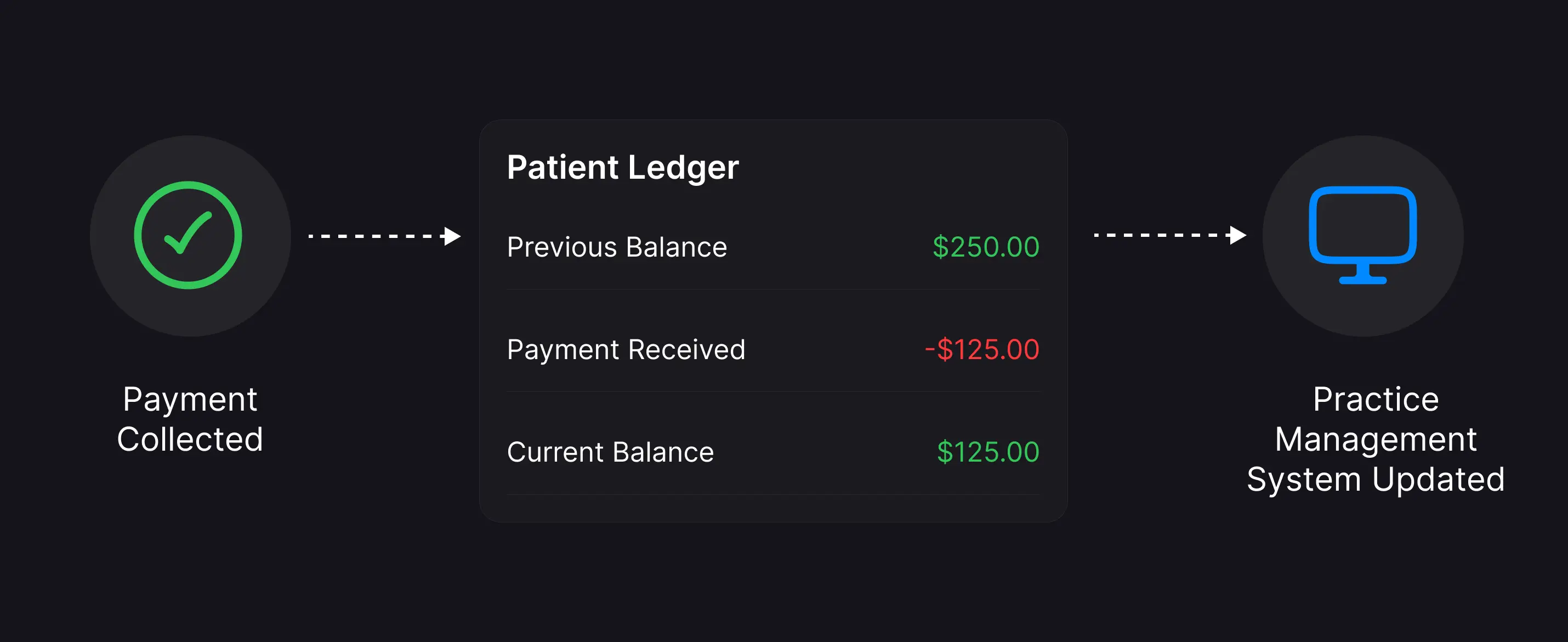
Patient ledger integration
Synchronizes all collected payments directly to the PM patient ledger in real time, reflecting accurate billing statuses and eliminating manual reconciliation.
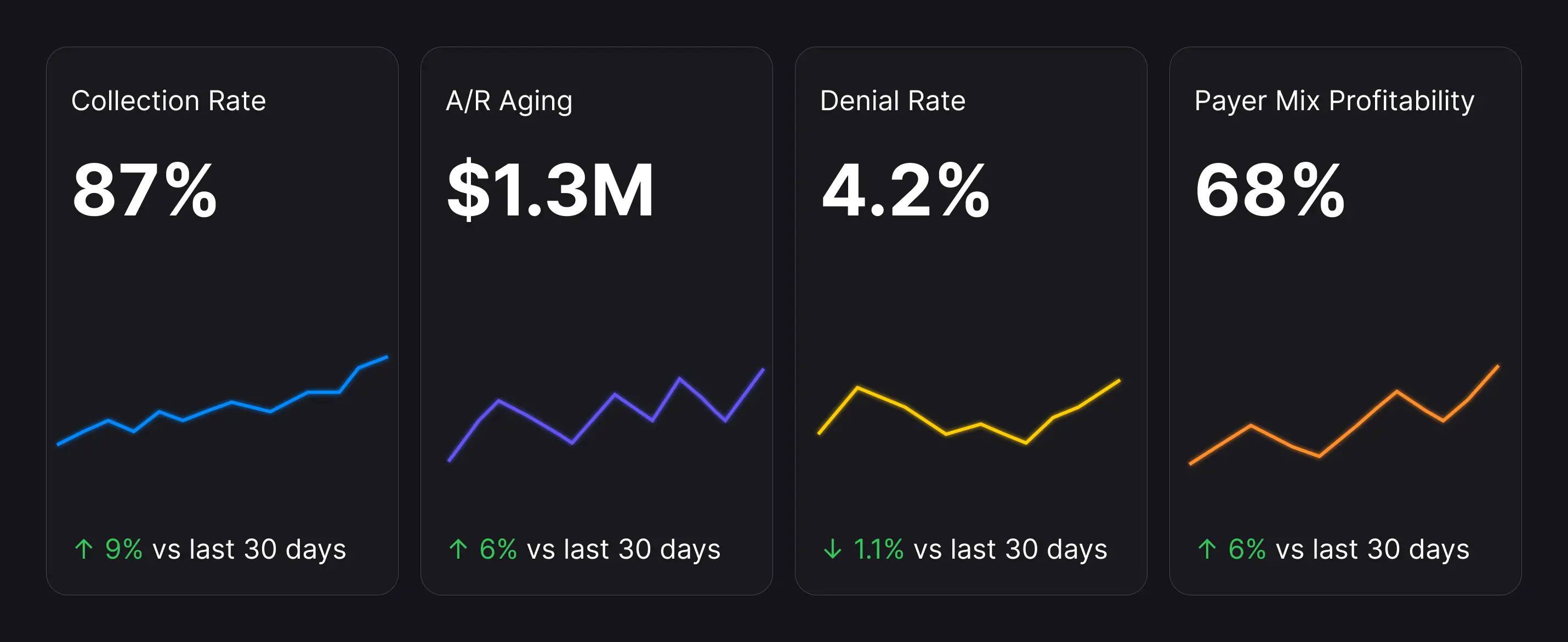
RCM analytics dashboards
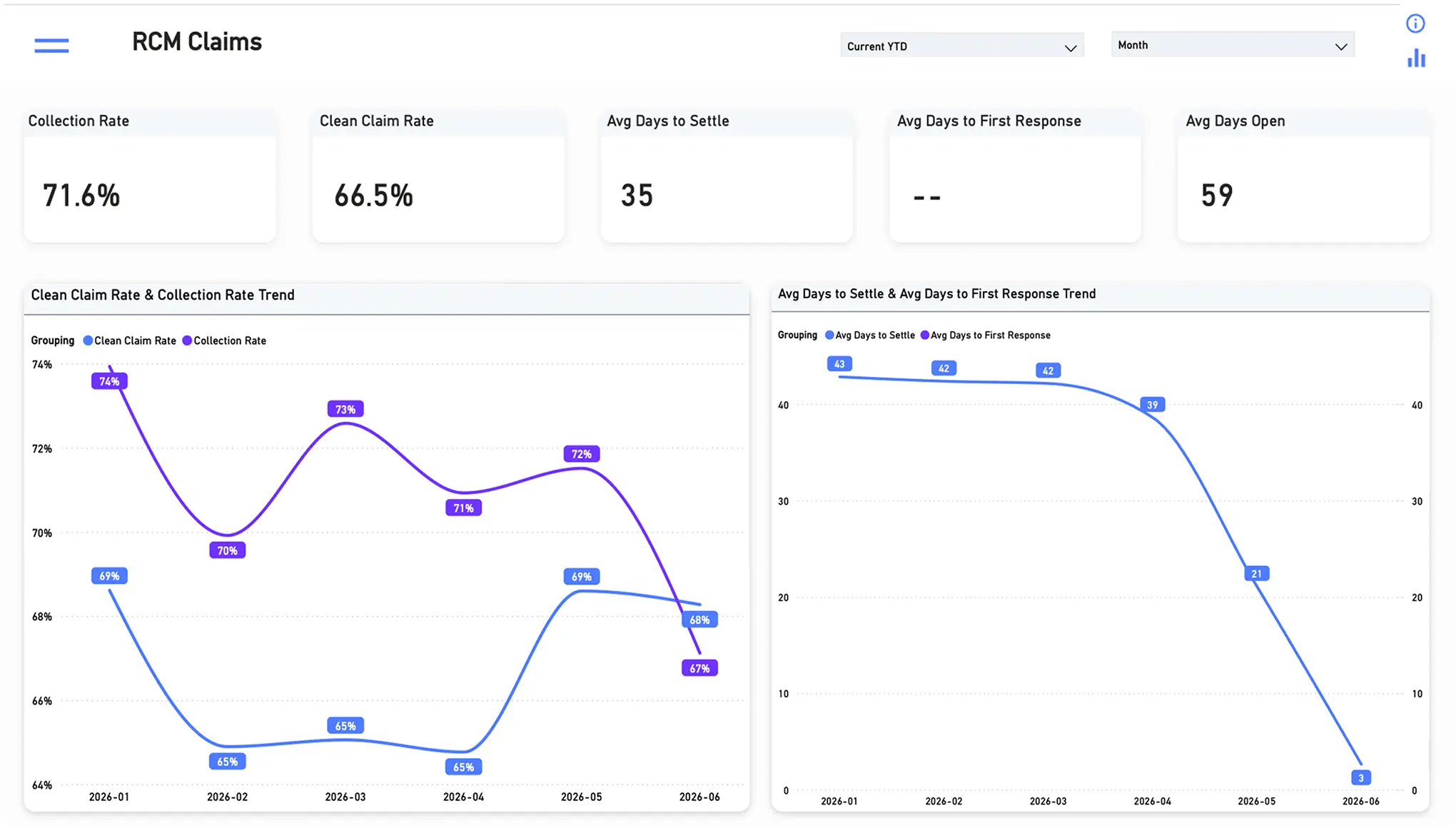
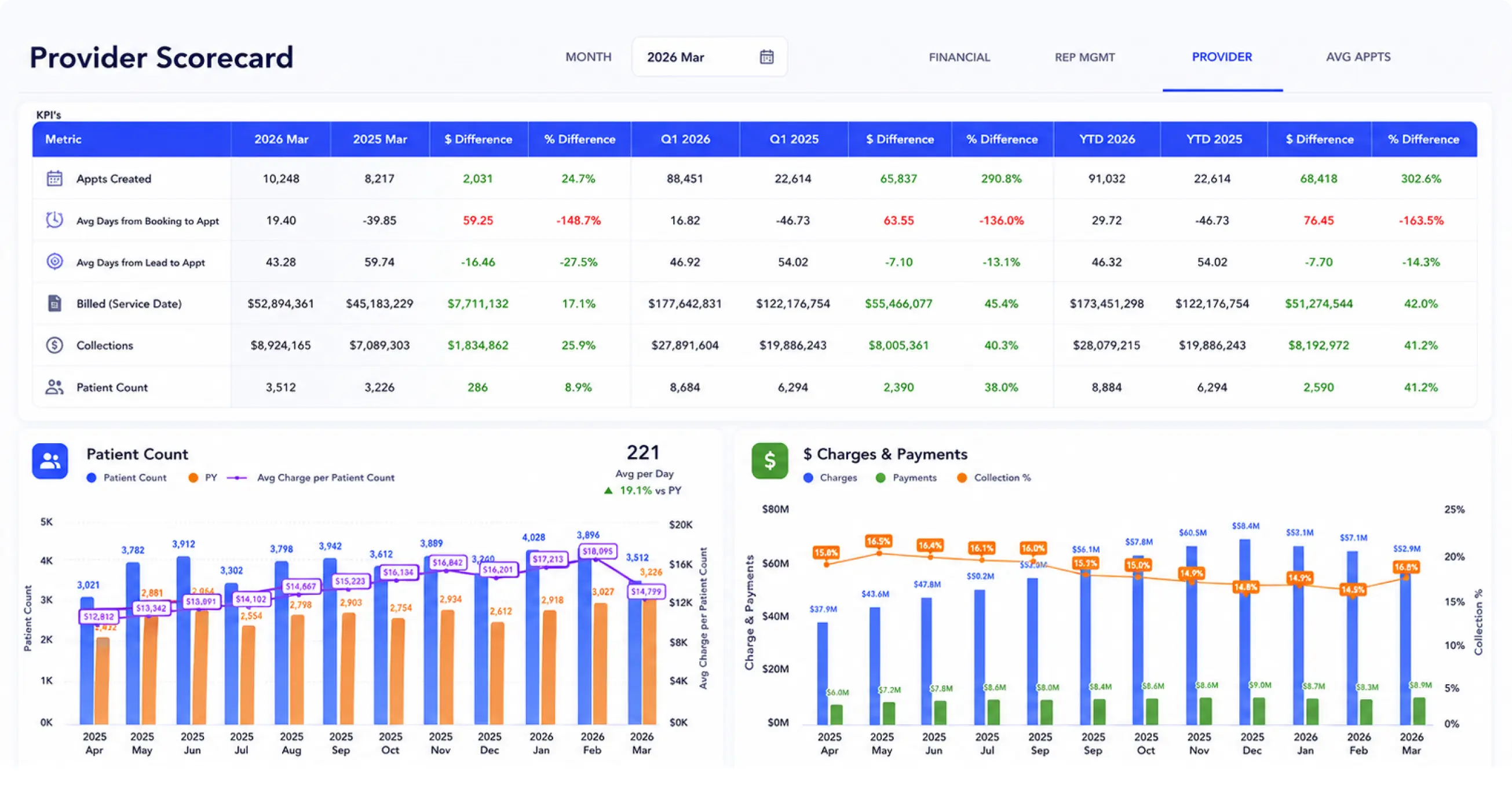
Deep reporting on collection rates, A/R aging, denial rates, payer mix profitability, and financial pipeline health by location, provider, and payer.
Got questions? We're here to assist
What is revenue cycle management software?
How does RSI's RCM software reduce denial rates?
How does automated patient payments software work for outstanding balance collection?
Can patient payment software integrate with our practice management billing system?