Creating Individualized Communication For Your Patients
In the rapidly evolving healthcare landscape, the use of marketing automation has become a crucial strategy for practices aiming to enhance their operational efficiency and patient engagement. By leveraging technology to nurture leads, educate patients, and increase appointment bookings, practices can significantly improve their marketing outcomes while ensuring a personalized patient experience. The benefits of implementing automated marketing strategies for healthcare practices are considerable, and include:
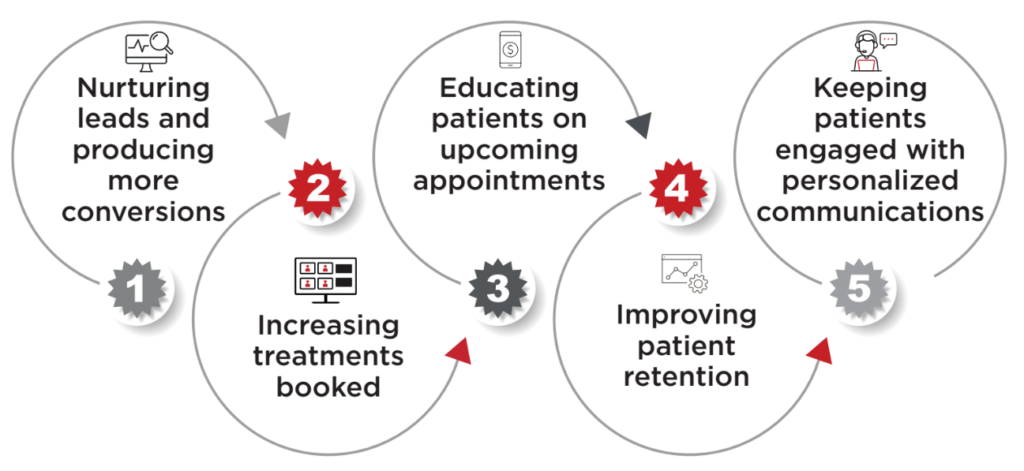
These benefits can all be achieved with little to no additional time required of your team members thanks to the automation of communications. In the following pages, we’ll explore some of the marketing automation techniques that RSI uses to transform patient engagement and boost practice revenues, including specific examples leveraged by aesthetics, dermatology, ophthalmology, and orthopedic practices.
These benefits can all be achieved with little to no additional time required of your team members thanks to the automation of communications. Below, we’ll explore some of the marketing automation techniques that RSI uses to transform patient engagement and boost practice revenues, including specific examples leveraged by aesthetics, dermatology, ophthalmology, and orthopedic practices.
Lead Nurturing
For instance, an aesthetics clinic with a pool of leads interested in Botox may send a series of automated marketing emails that looks something like this:
15
DAYS
AFTER LEAD SUBMISSION
An educational message explaining what patients need to know about the Botox treatment. It will help patients determine whether they are a good candidate for Botox treatments, encouraging them to book a consultation
30
DAYS
DAYS
A message encouraging patients to book a consultation. It may highlight the expertise or experience of the practice when it comes to Botox treatments, as well as a reminder of what makes a person a good candidate for treatment.
60
DAYS
DAYS
A message highlighting the benefits of Botox and the results that are possible with treatment. This may include before and after photos or testimonials from previous patients
90
DAYS
DAYS
Another message encouraging patients to book a consultation, recapping the benefits of treatment and why patients should choose this practice for Botox.
This approach of educational, personalized communications not only informs but also builds trust with leads. It is a powerful automated strategy to guide leads along the patient journey from their initial interest to booking their consultation.
Pre-Appointment Education
Once a patient has booked their consultation or appointment, the next opportunity for automated marketing communications is pre-appointment education. This step both prepares patients for their upcoming visits and enhances their engagement with the practice. When communicating with patients who have an upcoming consultation, this is a great opportunity to let them know what they can expect during their visit. You may also want to remind them to compile a list of any medications they’re currently on or to bring any documents that are relevant to their medical history.
Even patients who have already completed the consultation process and booked an appointment for treatment can benefit from pre-appointment education communications. For example, consider a dermatology practice that is welcoming a patient for laser hair removal. The laser hair removal treatment requires specific pre-treatment skin care considerations in order to optimize safety and efficacy. These include:
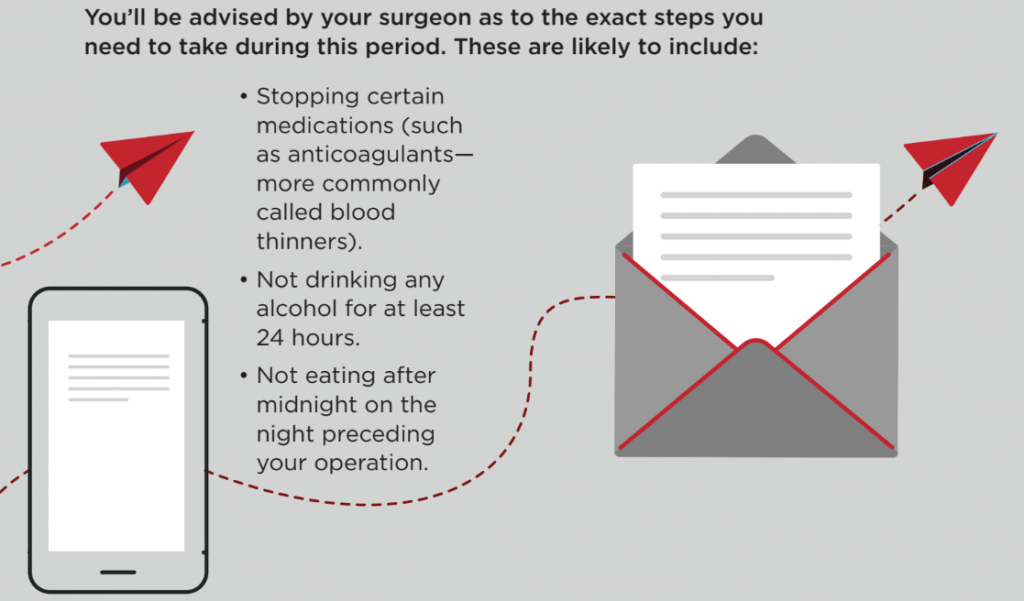
While these pre-treatment instructions can be communicated during the consultation or at the time of booking, many patients can benefit from text or email reminders leading up to their appointment, especially for treatments that are booked several weeks in advance. Pre-treatment skin care is a great example of automated marketing communications that educate the patient, leading to a better treatment experience and better outcomes.
Post Appointment Education
After a patient’s appointment, the focus of automated marketing communications shifts to post- appointment education, a critical phase for ensuring patient satisfaction, optimal recovery, and long- term engagement with the practice. This period offers an opportunity to extend the care and support provided during the visit, reinforcing the practice’s commitment to patient well-being and enhancing the overall patient experience.
For instance, consider a specialty like orthopedics, where most procedures require lengthy recovery processes, rehab sessions, and other complexities. Supporting a patient on this journey is not only beneficial for patient engagement and retention, but it’s essential to ensuring they achieve the best outcomes.
- Immediately after the surgery, patients receive an automated email or text message outlining the critical first steps in their recovery. This may include advice on managing post-operative pain, the importance of keeping the surgical site clean and dry, and instructions for using crutches or a knee brace.
- As the patient progresses, further communications can provide valuable information on physical therapy exercises to aid in strengthening and flexibility. These messages might link to videos demonstrating safe, effective exercises specifically designed for ACL recovery, ensuring patients have a clear, accessible resource to follow.
- Reminders for follow-up appointments can also be included, as they’re crucial visits for monitoring healing and adjusting rehabilitation plans as needed. These reminders can also serve to prepare patients for what to expect in the next stages of their recovery, whether it’s beginning more strenuous physical therapy, discussing a return to sports, or focusing on long-term knee health strategies
By tailoring post-appointment education to address the unique recovery timeline of a treatment, practices not only enhance patient outcomes but also strengthen their relationship with that patient. Patients who receive consistent, informative, and supportive communication are more likely to adhere to their recovery plans, experience better outcomes, and feel a stronger sense of loyalty to the practice. Also included in this category is post consultation education, which is a powerful tool for keeping patients engaged with the practice and eventually converting them to book a treatment. Many patients leave their consultation without scheduling an appointment, making automated marketing communications one of the best ways to get patients to return to the practice. With these communications, practices can:
- Encourage patients to reach out if they have additional questions about their procedure of interest
- Remind patients why their practice is a trusted choice for the procedure of interest
- Educate patients on why their procedure of interest is an effective option for reaching their treatment goals
- Keep patients engaged so that the practice is top of mind when patients are ready to begin treatment
Patient Recalls
After a practice has gotten a lead to convert and complete their treatment of interest, patient recalls offer an opportunity to re-engage patients with the practice and bring them back in for additional services. Automated marketing strategies play a crucial role in this phase, facilitating the process of reminding patients about the importance of regular exams and follow-up care.
A prime example of this is an ophthalmology practice sending reminders and communications about the importance of annual eye exams. The ophthalmology practice can leverage automated recall systems to send personalized reminders to patients about scheduling their annual eye exams. These reminders can be tailored based on the patient’s last visit, age, risk factors, or any previous conditions that require monitoring, such as glaucoma or diabetic retinopathy.
To enhance the effectiveness of these recalls, practices can incorporate educational content about the benefits of regular eye exams, including how they can prevent vision loss and contribute to overall health. This not only serves as a reminder but also educates patients on the value of proactive eye care, encouraging them to prioritize their eye health. Sharing information about the latest advancements in eye care and new services offered by the practice can also rekindle interest and encourage patients to return for additional treatments or consultations.
Even for practices outside of ophthalmology that may not offer regular exams, patient recalls can be a great way to get patients interested in additional treatments. By leveraging the information practices have on patients’ previous treatments and health concerns, patient recall communications can recommend and educate patients on complementary services that enhance their results and well-being.
With the proper patient recall strategies, practices can increase appointment bookings, improve patient retention, and foster a long-term relationship that benefits both the patient and the practice.
It is critical to keep patients on track with their recommended treatment plans for optimal results. Desired outcomes are best achieved by participation by both parties. This improves patient satisfaction and practice revenue.
No-Show/Cancellation Rebooking Reminders
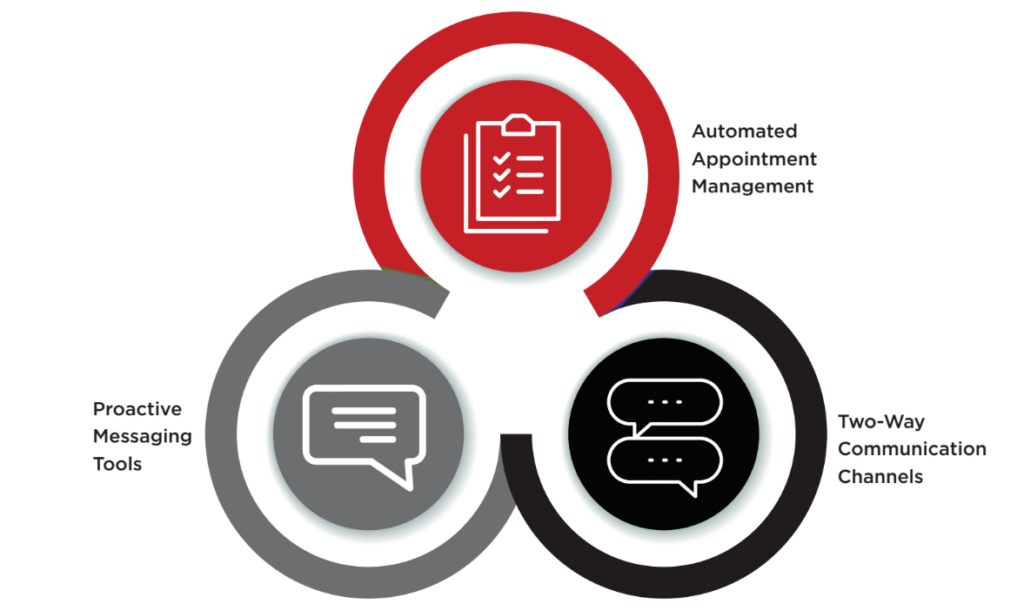
No-shows and cancellations significantly impact the operational efficiency and financial health of medical practices. The first step in addressing this issue is implementing automated appointment confirmation messaging. With it, practices can send timely reminders to patients to confirm upcoming appointments, making it more likely that the patient will show up to the visit. Furthermore, it provides patients with an immediate option to reschedule if they’re no longer able to make their appointment time, keeping them on the schedule instead of allowing them to drop off altogether.
Next, when no-shows or cancellations do occur, automated messaging can quickly engage the patient and give them an opportunity to reschedule. Additionally, implementing a feedback loop within these reminders can provide valuable insights into why appointments are missed. Including a brief survey or question about the reason for the cancellation or no-show can help practices understand patterns and barriers to attendance, allowing for targeted improvements to scheduling processes and patient communications.
When using a platform like the one RSI provides for marketing automation, rebooking reminders can be fully automated without the need for team member intervention. This is because RSI integrates with your CRM and practice management system, giving patients convenient access to appointment scheduling. Upon receiving an appointment reminder or a rebooking reminder, they can immediately view available time slots and schedule a visit at their convenience. This eliminates the need for calling office staff, which can be one of the barriers that prevents patients from taking action on appointment/rebooking reminders.
By making it easy and convenient for patients to reschedule missed appointments, practices can improve patient retention, enhance satisfaction, and minimize the financial impact of no-shows and cancellations, all while requiring less work of team members thanks to the automated processes involved.
Treatment Plan Reminders
For patients undergoing long-term treatment plans, automated treatment plan reminders are essential to keeping patients on-track with their treatments and engaged with the treatment process.
For example, consider an aesthetic practice that offers CoolSculpting, a non-surgical fat reduction treatment. CoolSculpting does not produce immediate results. Instead, patients will notice gradual fat loss in the weeks and months following treatment. Furthermore, patients typically require a series of treatments (as many as three or more) in order to achieve optimal results. In this example, automated treatment plan reminders can be integral to getting patients to return for the recommended number of treatments and achieve their desired results. Whether patients get discouraged by the subtlety of results they achieve initially, or simply forget about the long-term treatment plan, automated communications can keep patients informed and motivated.
Across medical practices of all specialties, treatment plan reminders can be used to serve a variety of purposes, such as:
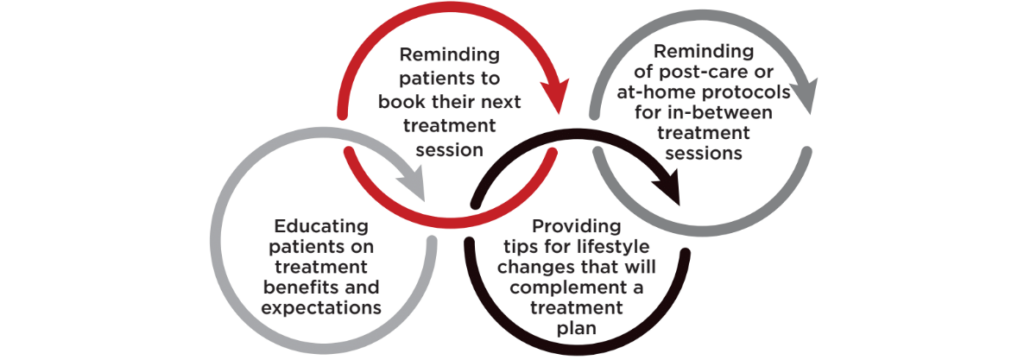
Ultimately, treatment reminders help bridge the gap between in-person interactions and the patient’s daily life, fostering a sense of support and guidance that extends beyond in-office visits. The ongoing engagement not only encourages patients to stay committed to their treatment plans but also builds a foundation of trust and loyalty, which is invaluable for patient retention and practice growth.
Unlock Powerful Marketing Automation with RSI
By incorporating automated marketing strategies, healthcare practices can nurture leads, educate patients, and improve both patient retention and ROI, ultimately fostering a loyal patient base and driving practice success. RSI helps practices do this with a suite of automated marketing tools and other industry-leading CRM solutions.
Contact us today to learn more and schedule a free demo, or explore our blog to discover other ways we can help you grow your business